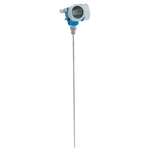
Effective glycol gas dehydration requires precise instrumentation to control moisture removal, prevent glycol carryover and meet gas quality specifications. By detecting process deviations early on, operators can take corrective action before damage occurs. While an excessive temperature increase in the reboiler might lead to faster glycol degradation and higher operating costs, contamination of downstream equipment due to glycol carryover undoubtedly jeopardizes your operational efficiency and infrastructure. From ensuring effective contact between wet gas and lean glycol to safely removing absorbed H2O during regeneration, each process step requires accurate monitoring and reliable insights.
Our portfolio covers gas analyzers for moisture detection, flow, pressure and temperature measurement solutions that support reliable dehydration performance, optimized throughput and compliant gas processing.
Your optimization potential in the dehydration process
Explore our process map to understand the key measurement parameters in glycol-based dehydration and discover where targeted improvements can reduce product loss and safeguard pipeline integrity in the long run.
_02.jpg)
_02.jpg)

Moisture measurement in gas dehydration: Proving gas quality and performance
You can control temperature, pressure and flow, but only moisture measurement confirms the result. Accurate, real-time monitoring turns dehydration from an assumed process into a verified and optimized operation, protecting both compliance and downstream assets.
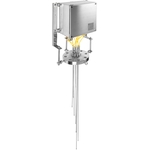
Tunable diode laser absorption spectroscopy (TDLAS) is used for real‑time detection of moisture in natural gas. By directly monitoring the water content in the gas, operators and engineers gain clear, real-time insight into whether the system is meeting specifications and running efficiently. Non-contact optical measurement avoids contamination and sensor drift due to vapor impurities. TDLAS-based gas analyzers, such as the J22, ensure the highest accuracy and reliability under harsh environmental conditions. While providing rapid response to concentration changes, these analyzers are insensitive to changing stream composition.
%20with%20flange%20connections%20for%20accurate%20measurement%20of%20natural%20and%20process%20gas%20-%20PP01.jpg)
Flow under control: From wet gas inlet to dry gas outlet
Accurate ultrasonic flow measurement is essential for controlling and verifying performance in gas dehydration units. At the inlet, it helps ensure the gas velocity is kept in the design limits of the glycol contactor, therefore supporting stable gas-glycol contact and reducing the risk of foaming, flooding or carryover. At the outlet, accurate flow data ensures stable operation and helps detect abnormal pressure drops or restrictions caused by fouling or carryover effects. Ultrasonic gas flowmeters such as our Prosonic Flow G 300 offer key advantages compared to mechanical meters: they are non-intrusive, exceptionally robust, suitable for wet gas and fluctuating feed gas composition. Ultrasonic flowmeters also ensure high accuracy as well as integrated advanced gas analysis capabilities.
_FieldXpert.jpg)
Reliable pressure and temperature measurement: Ensuring a stable dehydration process
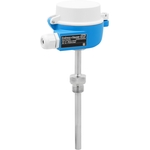
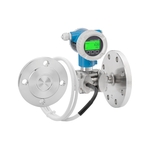
Pressure and temperature transmitters provide decisive insight into absorber performance, glycol regeneration, gas flow behavior and, therefore, overall process stability. In the contactor, pressure and temperature directly influence water absorption efficiency and gas quality. Monitoring these variables, together with differential pressure, helps detect foaming, flooding, fouling and turbulences as well as poor gas‑liquid contact at an early stage. iTHERM ModuLine TM131 ensures fast response times and captures dynamic process changes reliably thanks to iThERM QuickSens technology. Its wide measuring range makes it suitable for use in absorbers, flash tanks and regenerators. Deltabar PMD78B provides accurate pressure measurement and condition monitoring with Heartbeat Technology as well as long-term measurement stability and robustness.

Enhancing glycol circulation control with Coriolis technology
Coriolis flowmeters provide direct mass flow measurement independent of temperature, pressure or density changes. This is especially valuable in dehydration processes where glycol properties can vary during regeneration or due to contamination.
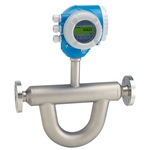
High accuracy at both low and variable flow rates makes these instruments well suited for lean and rich glycol circulation monitoring. Stable flow measurement helps operators maintain proper glycol-to-gas ratios, improve absorber efficiency and reduce the risk of glycol carryover or off-spec gas. Another major benefit is the ability to measure multiple process variables simultaneously: density measurement is particularly valuable because it allows operators to monitor glycol concentration and regeneration performance in real time. Changes in glycol density can indicate water contamination, poor regeneration efficiency or process instability. In addition, Coriolis flow meters such as Proline Promass Q 300 offer excellent long-term stability and space-saving installation.
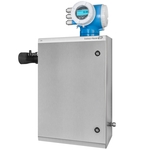

%20with%20flange%20connections%20for%20accurate%20measurement%20of%20natural%20and%20process%20gas%20-%20PP01.jpg "Picture of ultrasonic flowmeter Proline Prosonic Flow G 300 / 9G3B - Highly robust gas specialist")