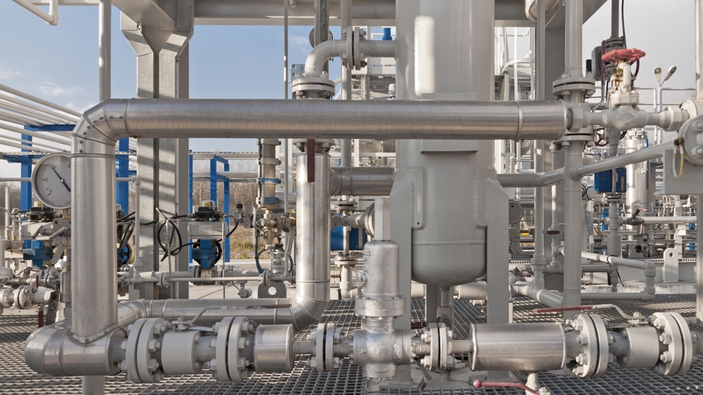
Gas sweetening with amines: Balancing energy efficiency and operational stability
Cleaner gas through proven sweetening technologies: Maintain consistent gas quality while addressing issues like contamination, foaming and off-spec gas in complex amine units

I korte træk
- Safeguard asset integrity: Protect pipelines, vessels and downstream equipment from acid gas-related corrosion and cracking.
- Ensure cleaner, specification-compliant gas: Remove H₂S and CO₂ to meet transportation, processing and sales gas requirements.
- Enhance amine unit performance: Optimize solvent health, regeneration efficiency and energy consumption for reliable operation.
- Support safe and sustainable operations: Reduce emissions risks, improve process safety and enable long-term operational efficiency.


Introduction to gas sweetening:
Natural gas extracted from reservoirs often contains acid gases such as hydrogen sulfide (H₂S) and carbon dioxide (CO₂). These impurities must be removed to meet pipeline specifications, ensure safe handling and protect downstream infrastructure and operations. Untreated gas can lead to corrosion, operational instability and environmental risks, making gas sweetening a critical step in natural gas processing.
Beyond compliance, cleaner gas improves process efficiency, reduces maintenance costs and supports reliable energy supply. As gas compositions become increasingly variable, especially with unconventional and sour gas sources, reliable sweetening technologies and tight process control are essential to ensure stable operations.
Importance of cleaner gas
Cleaner gas enables safer and more reliable operation throughout the natural gas value chain. Removing acid gases helps operators:
- Meet pipeline and sales-gas specifications
- Minimize corrosion risks in pipelines and equipment
- Protect compressors, heat exchangers and processing assets
- Reduce sulfur emissions and environmental impacts
- Improve energy content and support reliable downstream processing
Overview of sweetening technologies
Several technologies are available for acid gas removal, each suited to different operating conditions and gas compositions.
Although each technology has a role, amine treating remains the preferred solution for most gas sweetening applications due to its balance of efficiency, flexibility and proven performance.
Hydrogen sulfide removal
What is H2S and its impacts?
Hydrogen sulfide is one of the most challenging contaminants found in natural gas. It is highly toxic and can create significant operational and asset integrity concerns. Key risks include:
- Personnel exposure and safety hazards
- Sulfide stress cracking or hydrogen-induced cracking
- Corrosion in wet gas systems
- Catalyst poisoning in downstream processes
- Increased maintenance and inspection requirements
Even small concentrations can affect equipment reliability and operator safety, making H₂S removal a primary objective of most sweetening systems.
Amine treating process
For large-scale gas processing facilities, regenerative solvent systems provide the most efficient and economical approach to continuous H₂S removal. The process typically includes:
- Inlet separation: Before entering the sweetening unit, the gas passes through separators that remove free liquids, condensates and solids. This protects the amine solvent from contamination and reduces foaming risk.
- Absorption (amine scrubbing): The sour gas enters the bottom of the absorber column while lean amine enters near the top. As the gas and solvent flow in opposite directions H₂S and CO₂ are absorbed into the amine. The "sweet" gas then leaves the top of the column.
- Rich amine handling: The rich amine is routed to the regeneration section, often passing through flash drums and heat exchangers to recover energy and remove entrained hydrocarbons.
- Regeneration (stripping): In the regenerator or stripper, heat from the reboiler breaks the chemical bond between the amine and the acid gases, therefore releasing H₂S and CO₂. The regenerated solvent becomes lean amine again.
- Solvent conditioning: Before returning to the absorber, the lean amine is cooled, filtered and sometimes reclaimed or treated to remove contaminants. This step helps maintain solvent quality and reduce corrosion, fouling and foaming.
- Recycle: The lean amine is pumped back to the absorber and the cycle repeats continuously.


Carbon dioxide removal
Importance of CO₂ in gas quality
Although less hazardous than hydrogen sulfide, carbon dioxide can negatively affect gas quality and reduce process efficiency. Excess CO2 can:
- Lower gas heating value
- Increase compression requirements
- Create corrosion risks in the presence of water
- Impact LNG pretreatment performance
- Affect downstream processing efficiency
Fortunately, amine treating removes both H₂S and CO₂ in a single process, making it the preferred solution for many gas sweetening applications. Depending on gas composition and product specifications, operators can select different amine formulations to balance CO₂ removal performance, energy consumption and operational efficiency.
Common operational challenges in amine sweetening units
Even well-designed amine units can experience operational challenges that impact sweetening performance. Common failure modes include foaming caused by hydrocarbon carryover or solids contamination, solvent degradation due to elevated temperatures, heat-stable salt accumulation, corrosion in rich amine circuits and inadequate solvent regeneration. These issues can lead to increased energy consumption, solvent losses, reduced treating capacity and off-spec gas production.
When performance begins to decline, operators often investigate indicators such as rising absorber differential pressure, increasing H₂S slip, elevated CO₂ concentrations in treated gas, increasing solvent contamination levels or unexpectedly high regeneration energy demand. Regular solvent analysis, filtration, reclaiming and process monitoring help identify developing issues early and maintain stable sweetening performance.
Operational efficiency and process optimization
Reliable measurements of flow, temperature, pressure, level and gas quality provide the visibility needed to maintain stable operation and identify issues before they impact production. Monitoring acid gas concentrations, solvent circulation rates, column differential pressure, temperature profiles and regeneration performance helps operators detect foaming, solvent contamination and declining sweetening efficiency at an early stage.
Process optimization considerations
Optimizing an amine unit requires balancing contaminant removal performance, energy consumption, equipment constraints and asset reliability. Improvements in one area may introduce limitations elsewhere.
For example, increasing amine circulation can improve H₂S and CO₂ removal but may increase pumping requirements, reboiler duty and solvent losses. Similarly, increasing regeneration duty can improve lean amine quality but also increase energy consumption and solvent degradation if temperatures become excessive.
Operators must also balance deep contaminant removal against operating costs, treating flexibility and equipment capacity. Maintaining this balance requires reliable process measurements and a clear understanding of how operating conditions affect both sweetening performance and long-term unit reliability.

Benefits of optimized gas sweetening
A well-managed gas sweetening process delivers benefits across the entire facility, including:
- Improved pipeline and asset integrity
- Reduced corrosion risk
- Higher equipment reliability and uptime
- Lower energy consumption and solvent losses
- Greater process stability
- Enhanced safety and environmental performance
- More consistent compliance with gas specifications
Across the natural gas industry, operators continue to improve sweetening performance through process optimization, advanced monitoring and proactive solvent management, resulting in lower operating costs, longer solvent life, increased throughput and improved asset reliability.
Environmental safety and impact
Gas sweetening helps improve environmental performance by removing H₂S and other sulfur compounds before gas enters downstream processes. Efficient amine treating reduces toxic emissions, minimizes sulfur releases, lowers the risk of flaring during upset conditions and supports safer, more reliable operations.
Reducing environmental footprint
Optimized sweetening units consume less energy, reduce solvent losses and minimize waste generation. By maintaining stable operation and avoiding off-spec gas production, operators can further reduce emissions associated with reprocessing, shutdowns and process disruptions.
Compliance with international standards
Consistent acid gas removal helps operators meet pipeline gas specifications, environmental regulations, sulfur emissions limits, process safety requirements and asset integrity objectives. Reliable sweetening performance not only supports compliance but also reduces operational and regulatory risk.
Conclusion & outlook
Gas sweetening is essential for producing safe, marketable natural gas while protecting equipment and meeting environmental and operational requirements. By combining effective solvent management, process optimization and reliable monitoring, operators can improve performance, reliability and efficiency. As gas processing challenges evolve, advances in monitoring and solvent technology will continue to enhance operations, with amine treating remaining the industry's primary approach to acid gas removal.