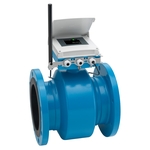
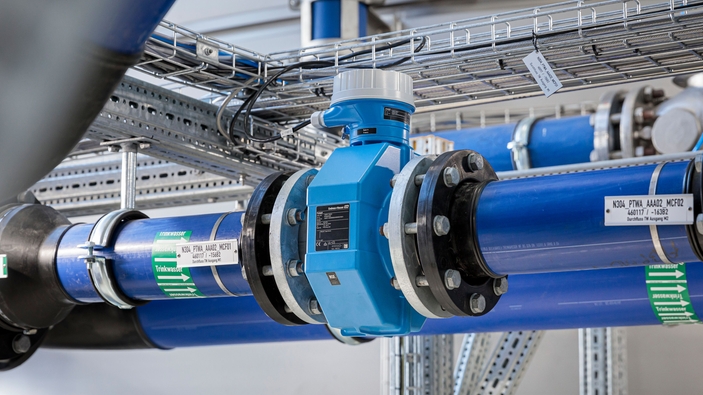
Conductivity measurement inside a flowmeter: additional process information without an extra sensor
Detect product transitions, contamination risks and cleaning phases earlier with simultaneous measurement of flow and conductivity in one sensor

In many food and beverage, life sciences, chemical, water and wastewater processes, flow measurement alone does not provide enough information to understand what is happening in the pipe. Additional information is needed to determine whether the fluid is changing, whether product and cleaning phases are clearly separated, whether concentration levels remain stable or whether process conditions are beginning to deviate.
Traditionally, this often requires a separate conductivity sensor and additional process connections, increasing installation effort and maintenance requirements. In compact skids, hygienic processes or retrofit projects, every additional sensor can also increase complexity and potential cleaning or leakage risks.
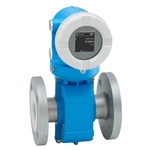
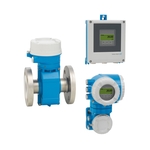
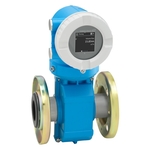
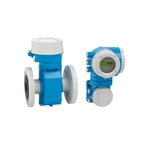
Conductivity measurement with Promag or Picomag flowmeters helps address this challenge by combining electromagnetic flow measurement and conductivity information in one measuring point.
Why conductivity is an important process indicator
Electrical conductivity describes how well a liquid conducts electrical current. It depends mainly on the ion concentration in the medium and on temperature. Because different liquids and concentrations often have different conductivity values, conductivity can be used as a practical indicator for process and media changes.
In daily operation, conductivity information can help identify product-to-water transitions, distinguish cleaning media from product, monitor concentration changes, support quality control and detect deviations in the process. It can also reveal unwanted impurities or contamination – for example due to the ingress of water, cleaning agents or foreign media into the product – because even small amounts of an intruding substance can noticeably change the conductivity of the liquid.
For this reason, conductivity is more than an additional measured value. It is a useful process signal that supports earlier detection of deviations, reduces uncertainty and enables more informed process decisions.

How integrated conductivity measurement within electromagnetic flowmeters works
Proline Promag and Picomag flowmeters use the electromagnetic measuring principle to determine volumetric flow. At the same time, the majority of them can also determine the conductivity of the medium using a conductive measuring method based on the existing electrodes.
As a result, one measuring point can provide two relevant process values: flow and conductivity. Compared with a separate conductivity sensor, this approach reduces additional hardware, process connections and maintenance effort while supporting a compact and transparent measurement setup.

Calibrated conductivity for greater measurement transparency
For selected Promag devices, even calibrated conductivity is available as an option. As standard, the conductivity measurement is specified with an accuracy of ±10% within the measuring range. With the calibrated conductivity option, the measurement is checked and documented during factory calibration and supplied with a calibration certificate, improving the specified accuracy to ±5%. In both cases, the measurement achieves a repeatability of up to ±1% and covers a wide measuring range from approximately 5 to 100 000 µS/cm, so it can be applied across low-conductivity water as well as higher-conductivity process media. The achievable accuracy, measuring range and response time depend on the sensor, transmitter and nominal diameter (DN) of the device.
Calibrated conductivity provides documented conductivity measurement performance and supports traceable measurement quality. This can be especially valuable when conductivity values are used for media identification, quality checks, cleaning control or documented process monitoring. Factory recalibration is also possible when a renewed confirmation of the conductivity measurement is required.
Temperature-compensated conductivity measurement
Conductivity values are temperature-dependent. If the temperature of the medium changes, the measured conductivity value changes as well. Temperature compensation helps make conductivity values more comparable and supports consistent interpretation of process conditions.
Promag H and Picomag devices with integrated temperature measurement can provide temperature-compensated conductivity directly. For Promag P and Promag W, temperature information can be supplied via analog or digital input signals and used for conductivity compensation based on a linear temperature coefficient.
Typical applications for conductivity measurement with Proline Promag and Picomag flowmeters
- Food and beverage processes: Conductivity measurement helps reliably detect product changeovers, distinguish product and water phases and monitor CIP and SIP processes, reducing product loss and supporting efficient cleaning procedures.
- Life sciences applications: Conductivity measurement supports media identification, cleaning verification and process monitoring in hygienic and regulated environments, helping ensure consistent production conditions.
- Chemical processes: Conductivity measurement enables concentration monitoring and early detection of process deviations, providing valuable information for stable and efficient chemical production.
- Water and wastewater applications: Conductivity measurement provides continuous insight into water quality and treatment processes, helps detect contamination or unexpected changes in the medium and react quickly to process variations.
- Mining, minerals and metals processes: Conductivity measurement supports process water monitoring, concentration control in leaching as well as hydrometallurgy and early detection of process changes, helping keep operations stable and efficient.
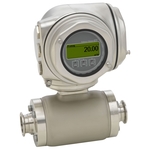

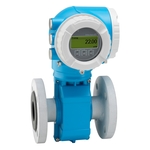
%20with%20flange%20connections%20for%20process%20applications%20-%20PP01.jpg "Picture of Electromagnetic flowmeter Proline Promag P 300 / 5P3B for process applications")
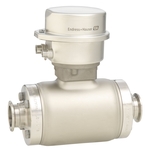
%20The%20economical%20flowmeter%20for%20process%20quality%20control%20and%20monitoring%20-%20PP01.jpg)